
If you have ever stood in your driveway late at night, hitting the wall button again and again while your garage door refuses to move, you are not alone. At Belerick Garage Doors LLC, we do garage door troubleshooting every day for homeowners and business owners across Brushy Creek, Austin, and nearby Texas communities. A garage door looks simple, but it is a heavy system with springs, cables, rollers, tracks, hinges, and an opener that all need to work together. When one part goes wrong, the whole door can act up.
Here is a quick story from our team. A family in Brushy Creek called us after their door slammed shut so hard it shook their house. The homeowner tried to “fix it” by tightening random bolts and spraying oil everywhere. That made the problem worse. Their torsion spring was cracked, and the extra force they applied threw the door out of balance. Instead of a quick repair, they ended up needing new springs, reset cables, and track alignment. That kind of situation is way more common than people think.
National safety groups report tens of thousands of garage door injuries every year, often because people guess at fixes without understanding the system. A door that weighs over a hundred pounds can fall fast if a spring or cable fails. The good news is that most mistakes are easy to avoid when you know what to watch for and when to call trained technicians. This guide will walk you through the most common troubleshooting errors and give you clear steps to stay safe, protect your door, and save money.
Why Garage Door Troubleshooting Is Tricky
Garage doors are not like a normal interior door. They move on tracks, are lifted by high-tension springs, and rely on an electric opener that must sense resistance and stop if something is in the way. That means a small issue can look like a big one, and a big one can look small until it becomes dangerous.
Many homeowners treat garage door troubleshooting like fixing a squeaky hinge. But the garage door system is closer to a machine. Every part has a job:
- Springs carry most of the door’s weight.
- Cables guide the lift and keep tension balanced.
- Rollers and tracks keep the path smooth.
- Opener and sensors control safe movement.
- Hardware holds everything in place during thousands of cycles.
If you fix the wrong part or ignore the real cause, your door may work for a day and fail again, sometimes worse.
Mistake 1: Ignoring the Garage Door Balance Test
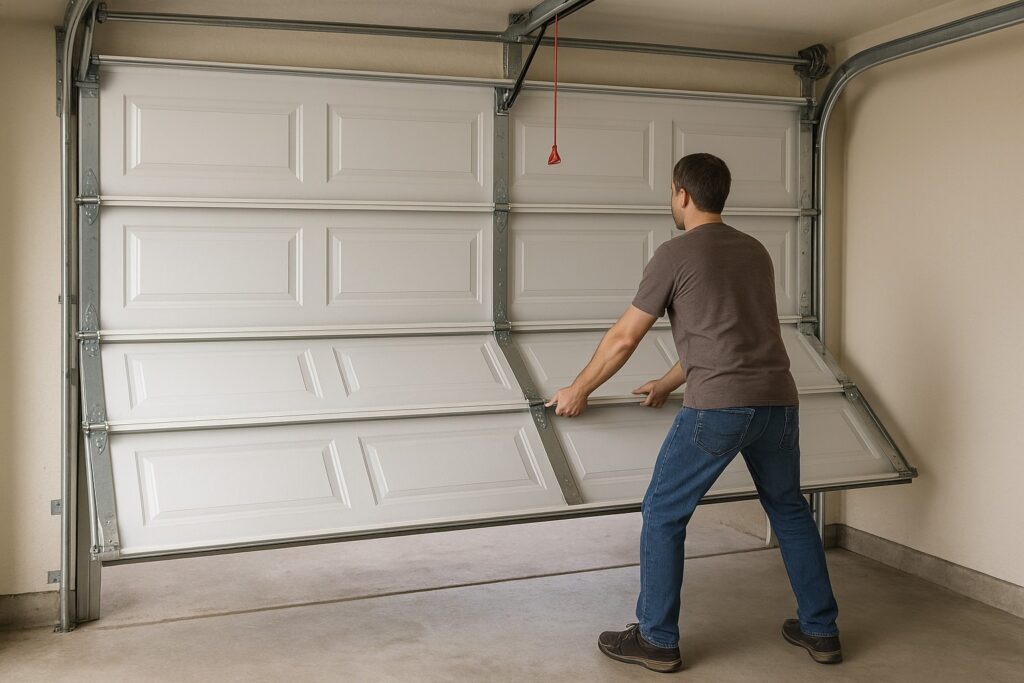
One of the biggest troubleshooting mistakes is skipping the balance test. A balanced door should stay in place when lifted halfway. If it falls or shoots up, your springs are not doing their job.
Why this matters:
If the door is unbalanced, your opener has to work harder. That causes gear wear, motor strain, and early failure.
How to avoid it:
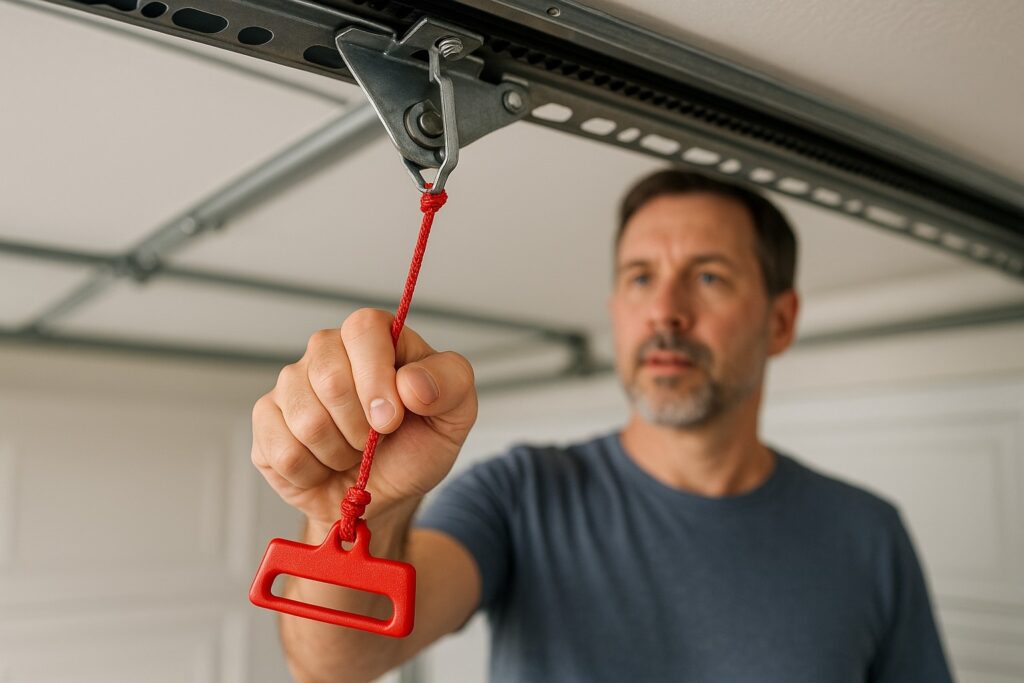
- Pull the emergency release cord to disconnect the opener.
- Lift the door halfway by hand.
- Let’s go carefully.
- If it moves up or down on its own, stop using the opener and call a professional.
This test is safe if you do it gently. Do not try to “fix” springs yourself. High-tension springs can snap and cause serious injury.
Mistake 2: Treating a Broken Spring Like a Minor Problem
A broken spring is one of the most dangerous garage door problems. People often hear a loud bang, then assume the opener “just needs help,” so they keep opening and closing the door.
Why is this risky?
With a broken spring, your door is basically dead weight. The opener is not designed to lift the full load. You can burn out the motor or cause the door to drop suddenly.
Signs of broken springs:
- Door feels extremely heavy by hand
- Door only lifts a few inches
- A visible gap in the torsion spring
- Loud snapping sound earlier
How to avoid it:
If you suspect spring damage, stop using the door and schedule service. Our Brushy Creek technicians replace torsion springs and extension springs using the right tools, safety clamps, and correct tension calculations.
Mistake 3: Over-lubricating Everything
Lubrication helps a garage door run smoothly, but too much can attract dirt and gum up parts. We see this a lot in homes where people spray thick grease on rollers, tracks, hinges, and even sensors.
Why does this hurt your door?
Dust and grit stick to excess oil like glue. That causes loud noises, roller wear, and jerky movement.
How to avoid it:
- Use a garage door lubricant, not heavy grease
- Lubricate hinges, rollers, and springs lightly
- Never lubricate the tracks directly. Tracks should be clean and dry.
- Wipe extra lubricant away
If your door still makes loud noises after proper lubrication, there may be worn rollers or loose hardware.
Mistake 4: Tightening Random Bolts Without Checking Alignment
We love a good DIY spirit, but random tightening causes problems. People see a wobble, grab a wrench, and start cranking down bolts everywhere.
Why this is a mistake:
Tracks need to stay aligned. Too much tightening in the wrong place can twist brackets, pull tracks out of line, and create uneven movement.
How to avoid it:
- Only tighten visibly loose hardware
- Check the track spacing on both sides
- Look for bent brackets or gaps
- If the door still shifts, call a pro
Our technicians use leveling tools and alignment checks to make sure tracks stay parallel and smooth.
Mistake 5: Misreading Sensor Issues
Safety sensors stop the door if something is in the way. Many homeowners assume sensors are “bad” when in reality they are dirty, bumped, or misaligned.
Common sensor mistakes:
- Wiping lenses with rough cloths that scratch
- Forcing brackets without realignment
- Bypassing sensors with tape or zip ties
How to avoid it:
- Clean lenses gently with a soft cloth.
- Check both sensors for steady lights.
- Make sure they face each other at the same height.
- Remove any clutter near the beam.
Never disable sensors. That is a safety hazard, especially if kids, pets, or cars move through the garage often.
Mistake 6: Assuming the Opener Is Always the Problem
People often jump straight to “the opener is broken.” But openers usually fail because something else is wrong first.
Real causes we find often:
- Door is unbalanced
- Rollers are worn
- Tracks are binding
- Springs are weak
- Cables are fraying
How to avoid it:
Before replacing an opener, check door movement by hand. If it does not lift smoothly, fix the door system first. Otherwise, a brand new opener will struggle just like the old one.
Mistake 7: Forgetting About the Manual Release
During power outages in Austin storms, homeowners sometimes keep trying the opener button, thinking it will magically work.
Why it matters:
Forcing the opener can strip gears. Also, you might need to open the door manually to get your car out.
How to avoid it:
Learn where your emergency release is and how to use it. Practice when the door is working normally. That way, you are not guessing in an emergency.
Mistake 8: Using the Wrong Replacement Parts
Garage doors are not one size fits all. Springs, rollers, cables, and openers need specific sizing. We have seen homeowners install the wrong spring rating or use cheap rollers that do not match the track type.
Why this is dangerous:
Incorrect parts throw off the door balance. That leads to sudden drops or constant strain.
How to avoid it:
- Use manufacturer specs
- Check door weight and height
- Match roller diameter and stem length
- Call a professional if unsure
At Belerick Garage Doors LLC, we only use high-quality parts suited to your exact door system, whether it is a residential door or a commercial parking garage door.
Mistake 9: Not Checking the Building Code and Door Clearance
In Texas, garage doors must meet local building code for safety gaps, wind load, and proper header support. DIY troubleshooting often ignores this.
You might see people in online discussions talking about “garage door headers” or “pedestrian door size” rules. In some building resource forums, a sawhorse member or moderator like Uncle Bob, Joe.b, or Steveray might remind people about code knowledge, EnergyStar efficiency, or even r311.1 clearance rules. These details matter in real life, not just in a forum.
How to avoid it:
- Make sure your door has proper clearance
- Check that headers are strong and not cracked
- Confirm your setup meets the Austin area building code
If you are upgrading, replacing, or adding insulation for Energy Star-style energy savings, we can verify everything meets code and fits your garage opening safely.
Mistake 10: Overlooking Small Signs Until They Become Big Repairs
Garage doors whisper before they scream. A little noise or slow movement is usually a warning.
Early signs to watch:
- Door shakes on the way up
- Rollers squeak or grind
- Cables look frayed
- Door pauses mid-travel
- Opener light flashes error codes
How to avoid it:
Do a simple inspection every few months. If you are not sure what you are seeing, take a photo and call our team. Small adjustments now prevent costly repairs later.
Mistake 11: Copying Random Internet Fixes
We get it. The internet is full of “quick fixes.” But some advice is unsafe or wrong for your door model. It can feel like a giant community thriving with knowledge, thanks, support, sponsors, and contributions. You will see silver member posts, bronze member posts, lifetime member guides, and random member hacks. Names like Paul Silver, Vegas Paul Silver, Glennman CBO silver, bill1952 sawhorse, mtlogcabin sawhorse, ryan81 member rlga, cboboggs moderator conarb, or even sawhorse ice moderator pop up in old discussions.
Some of those posts are helpful. Some are outdated or just wrong for modern systems. Your door in Brushy Creek may not match someone else’s high desert setup or vineyard-style garage. A fix that worked for a car barn in Vegas could be bad for a tight-seal, insulated door in Austin.
How to avoid it:
Use online videos only for basic observation steps, like cleaning sensors or testing the balance. Never follow instructions for spring winding or cable repair unless you are trained. When in doubt, call us.
Safe DIY Steps for Garage Door Troubleshooting
Here are actions a homeowner can safely do without special training:
- Check the power source – Make sure the opener is plugged in, and the breakers are not tripped.
- Replace remote batteries – A weak remote can look like a bad opener.
- Clean and align sensors – Dirt or bumps cause false stops.
- Inspect tracks for debris – Remove small rocks, ice, or dirt clumps.
- Listen for changes – New grinding, popping, or squealing sounds need attention.
- Test door balance – Only as described earlier, and stop if unbalanced.
Anything involving springs, cables, bent tracks, or opener internal wiring should be handled by professionals.
Real World Example From Brushy Creek
A local shop near Brushy Creek had a commercial garage door that opened halfway, then slammed shut. Their manager tried repeatedly pressing the open button and even held the door with a sawhorse in place, thinking it was “just sticking.” The real issue was a frayed lift cable on one side. That uneven tension dragged the door crooked and triggered the opener’s safety reverse.
We replaced both cables, reset tension, lubricated rollers, and adjusted track alignment. The door has run smoothly since. If they had kept forcing it, the cable could have snapped completely, and the door might have crashed down on a vehicle or bollard near the parking area.
When You Should Call a Professional Right Away
Stop DIY troubleshooting and call us if you notice:
- Broken or stretched springs
- Door slams shut or falls fast
- Cables loose, frayed, or off the drum
- Tracks are bent or pulling from the wall
- Opener strains loudly without moving the door
- Door panels are cracked or shifting
- Repeated sensor failures even after cleaning
These are not small “try one more thing” problems. There are safety and longevity issues.
Frequently Asked Questions (FAQs)
1. Why does my garage door open or close by itself sometimes?
This is usually caused by a remote or keypad signal issue, like a stuck button, a neighbor’s remote on the same frequency, or a wall control that is shorting out. Reprogramming the opener and clearing old remote codes often fixes it, but if it keeps happening, a technician should check the control board.
2. How much does it usually cost to fix a garage door spring in Texas?
Spring repair costs depend on whether you have torsion or extension springs, the door size, and how many springs need replacement. In Central Texas, most homeowners pay a few hundred dollars for a safe professional spring swap, including labor and proper balancing.
3. How long should a garage door opener last before it needs replacement?
Most openers last around ten to fifteen years with normal use, though heavy daily cycling can shorten that time. If your opener is noisy, slow, or lacks modern safety and smart features, replacement can be a better choice than repeated repairs
4. What kind of maintenance schedule helps prevent future garage door problems?
A simple checkup twice a year is a good rule, with a full professional tune-up about once a year. Regular inspections catch worn rollers, loose hardware, and early spring fatigue before they turn into bigger issues.
Final Thoughts
Garage door troubleshooting does not have to be stressful, but it does need a smart and careful approach. The biggest mistakes happen when people rush, guess, or follow unsafe advice without understanding how the door system works. A garage door is heavy, powerful, and full of high-tension parts. Treating it like a simple household fix can lead to injury or expensive damage.
Remember the basics. Check balance. Respect springs. Do not over-lubricate. Keep sensors clean and aligned. Avoid random tightening. Watch for early signs of wear. And do not trust every forum tip, no matter how confident a silver or bronze member sounds in a long thread full of public thanks and search welcome messages.
If you stay cautious and know your limits, you can handle small checks safely and keep your door working well for years. When the problem goes beyond basic inspection, professional service is the safest and most cost-effective move.
How Can Belerick Garage Doors LLC Help You?
If your garage door is stuck, noisy, uneven, or just not acting right, we are ready to help. At Belerick Garage Doors LLC, we provide trusted garage door troubleshooting, repair, installation, and maintenance for homes and businesses in Brushy Creek, Austin, and surrounding Texas areas. Our trained technicians handle everything from broken springs and worn rollers to malfunctioning openers and custom door upgrades.
We do not guess. We inspect the full system, find the real root cause, and fix it using the right tools and high-quality parts. Whether it is a residential garage door at your home or a heavy-duty commercial setup in a parking garage, we deliver safe, reliable results.
Call us today to schedule service or get a clear answer fast.
Belerick Garage Doors LLC
Address: 701 Tillery St., Austin, TX 78702
Phone: (512) 601-4514
Your garage door should protect your home, your car, and your daily routine. Let our local experts keep it running smoothly and safely.