

A loud snap. A door that drops a few inches and then freezes. A car was trapped inside five minutes before school drop-off. We handled a real case like this on a hot Austin afternoon when a homeowner heard a bang and found their door crooked and stuck. The issue was a broken torsion spring and a frayed lift cable. No one was hurt, but the situation could have caused serious injury. This is why timely, professional garage door repair matters. It keeps people safe, keeps your day on track, and saves you money by stopping small issues from turning into big, expensive problems.
Every year, families across the United States deal with preventable garage door incidents. Many are caused by worn springs, misaligned tracks, loose hardware, or openers that no longer sense objects in the path. Professional diagnosis and repair turn guesswork into certainty. Technicians use the right tools, apply the correct torque, balance the door, and test safety features so your door moves smoothly and safely every time.
At Belerick Garage Doors LLC here in Austin, we see the same pattern again and again. A little noise becomes a loud rattle. A small lag becomes a jam. A tiny gap along the bottom seal can lead to higher energy bills and moisture damage. When you act early and let trained technicians handle the problem, you extend the life of your door, avoid last-minute emergencies, and reduce risk for your family and your business.
Why Your Garage Door Needs Regular Care
Your garage door is the largest moving object in your home. It can weigh two hundred pounds or more, and you likely use it several times a day. That constant motion adds up. Springs cycle. Rollers turn. Hinges pivot. Tracks collect dust. Cables stretch. Sensors drift out of alignment. Without care, wear turns into damage, and damage turns into unsafe operation.
Professional service brings three big benefits:
- Precision: A balanced door opens with minimal strain. Technicians set spring tension, level the door, and verify that both sides carry equal load. Precision reduces noise, protects parts, and makes the opener last longer.
- Prevention: A careful inspection catches the early signs of trouble, such as hairline cracks in end bearings, flattened roller wheels, or slight track rub that hints at misalignment. Fixing these early is far cheaper than replacing an opener or a full door later.
- Peace of Mind: A smooth, quiet door that responds the same way every time makes leaving for work, coming home, and locking up at night simple and safe.
The Real Costs of Delaying Repairs
Small symptoms often hide larger problems. Here is how postponing service can affect your budget and your safety:
- Parts chain reaction – A misaligned track makes rollers wear unevenly. Worn rollers strain hinges. Loose hinges, stress panels, and tracks. What could have been a quick adjustment becomes a multi-part replacement.
- Opener overload – When springs lose strength, the opener works harder to lift the door. Motors overheat. Gear housings strip. Safety sensors struggle as the door lurches. Replacing an overworked opener costs far more than rebalancing springs early.
- Energy loss – Gaps at the bottom or sides let hot air and dust into the garage. Your HVAC works harder when warm air reaches rooms above or beside the garage. A simple weather-seal replacement can lower energy waste and protect stored items from moisture.
- Property damage and injury risk – A failing cable or spring can let the door slam shut or drop out of level. Vehicles, stored tools, and most importantly, people can be harmed. Professional attention removes this risk.
Components That Most Often Need Attention
Understanding the main parts of your garage door helps you spot problems sooner and talk clearly with your technician.
- Springs – Torsion or extension springs counterbalance the door’s weight. When they weaken or break, the door becomes heavy and unsafe to lift. Spring work is a job for trained techs because of the stored energy involved.
- Cables – Lift cables wind on drums to raise and lower the door. Fraying strands, rust, or slack indicate a cable that needs replacement before it fails.
- Rollers and Hinges – These moving parts guide each panel section along the tracks. Flat-spotted rollers or loose hinges cause grinding sounds and jerky movement.
- Tracks and Brackets – Bent tracks, loose lag screws, or out-of-square mounting brackets make the door rub or bind. Correct alignment is crucial for smooth operation.
- Openers and Safety Sensors – The opener provides power and control. Photo-eye sensors prevent the door from closing on a person or object. Dust, vibration, or bumps can misalign sensors, so they should be tested and adjusted regularly.
- Weather Seals and Thresholds
Bottom seals, side stops, and top seals keep out water, dust, and pests and help maintain temperatures.
DIY vs. Professional Repair: What You Can Safely Do
Some upkeep is safe for most homeowners. Other tasks should be handled by trained technicians.
Safe homeowner tasks
- Wipe and gently clean photo-eye lenses.
- Test the auto-reverse feature using a two-by-four laid flat under the door, and verify the door reverses when it touches the board.
- Brush debris from tracks.
- Inspect weather seals for cracks or gaps.
- Listen closely and note new noises or changes in speed.
Leave these to professionals
- Spring replacement or adjustment.
- Cable replacement.
- Track realignment that requires loosening structural fasteners.
- Opener internal repairs.
Panel replacement and structural reinforcement.
Attempting high-tension repairs without the right tools and training can lead to severe injury. Professionals use winding bars, calibrated torque settings, correct fasteners, and the proper replacement parts for your door’s weight and brand.
A Simple Home Safety Check You Can Do Today
Once a month, run through this quick checklist:
- Balance test: With the door closed, pull the opener’s release cord to operate the door by hand. Lift the door halfway. If it stays in place, balance is good. If it falls or rises, call for service.
- Sensor test: Close the door and wave an object across the sensor beam. The door should reverse immediately. If not, clean and realign sensors or schedule service.
- Auto-reverse test: Place a two-by-four under the door and close it. The door should reverse upon contact. If it does not, call for service immediately.
- Hardware check: Look for loose hinges, missing fasteners, or wobbling brackets. Do not tighten critical hardware if you are unsure. Note any issues and call a technician.
- Weather-seal check
Look for light or air gaps around the door. Replace worn seals to keep out water and dust and to reduce energy loss.
How Regular Maintenance Saves You Money Over the Years
Think about your door like a car. Oil changes keep engines healthy. Tune-ups keep everything in sync. The same is true for your garage door.
What a professional tune-up includes
- Thorough inspection of springs, cables, rollers, hinges, panels, drums, and end bearings.
- Lubrication with the right product for rollers and hinges.
- Tightening of loose hardware with proper torque.
- Spring tension check and balance adjustments.
- Track inspection and fine alignment.
- Opener force, travel, and sensitivity tests.
- Photo-eye alignment and safety verification.
- Weather-seal evaluation and recommendations.
The payoff
- Fewer emergency calls.
- Longer life for the opener and door parts.
- Quieter operation, better security, and improved energy control.
- Predictable budgeting for maintenance rather than surprise breakdowns.
Common Repairs We Handle in Austin, With Real-World Examples
- Broken torsion spring in East Austin: A homeowner heard a bang and found the door too heavy to lift. We replaced both springs as a matched pair, balanced the door, and recalibrated opener settings. Total time on site was under two hours, and the door now opens quietly and safely.
- Noisy, jerky door in South Lamar: The problem was flat-spotted rollers and dry hinges. New rollers, lubrication, and hinge adjustments reduced noise and prevented wear on the opener.
- Opener that would not close in Mueller: Sun glare and dust had misaligned the safety sensors. We cleaned lenses, adjusted brackets, and updated the opener’s travel limits, restoring proper safety performance.
- Water intrusion in a Westlake garage: A worn bottom seal and a slight slab slope let water into the garage during storms. We installed a new bottom seal and a threshold kit to keep water out and lower humidity inside the space.
Commercial vs. Residential Doors: The Differences That Matter
Commercial garage doors face heavier use and often lift larger, heavier panels. This means:
- More frequent cycles: Businesses may cycle doors dozens or hundreds of times per day. Springs and bearings wear faster and need proactive replacement before a failure disrupts operations.
- Specialty hardware: Commercial doors may use high-lift or vertical-lift tracks, heavier drums, and chain-hoist or jackshaft openers. Proper service keeps operations safe and efficient.
- Safety and compliance: Commercial spaces require consistent safety checks to protect staff, customers, and goods. Routine maintenance reduces downtime and supports insurance and safety compliance.
Whether you own a storefront, a service bay, a warehouse, or a residential home, our technicians tailor repairs and maintenance to your door’s size, cycle count, and daily demands.
Energy Efficiency and Weather Protection for Austin Homes
Austin’s heat and sudden storms put your garage door to the test. A door with intact weather seals, insulated panels, and a properly aligned track system helps:
- Keep hot air and dust from reaching interior spaces.
- Protect stored items, tools, and vehicles from moisture.
- Lower the load on your HVAC system, especially in rooms over or beside the garage.
Quick upgrades that pay off
- Replace brittle bottom seals and side stops.
- Add a threshold to block wind-driven rain.
- Consider insulated panels for comfort and energy savings.
- Keep the door balanced so the opener need not strain in hot weather.
Quieting a Noisy Garage Door
A loud door is not just annoying. It often signals friction or misalignment.
Practical steps
- Replace worn rollers with high-quality nylon rollers.
- Lubricate hinges and bearings with the correct non-silicone garage door lubricant.
- Tighten loose hardware with proper torque.
- Verify track spacing and door alignment.
- Balance springs so the opener is not pulling a heavy, unbalanced load.
The result is a smooth, soft sound that signals healthy operation and protects your opener.
Smart Openers, Security, and Safety
Modern openers bring convenience and additional safety:
- Rolling-code technology prevents easy code grabbing.
- Smartphone apps allow remote closing and alerts if the door is left open.
- Battery backup keeps your door operating during power outages.
- Soft-start and soft-stop reduce wear on gears and lower noise.
Professional installation ensures correct force settings, travel limits, and sensor alignment so technology works hand in hand with safety.
Choosing the Right Garage Door Company
Here is what to look for when you call for help:
- Trained, experienced technicians who work on your door’s brand and model.
- Clear, written estimates and explanations before work starts.
- Quality parts that match your door’s weight and cycle rating.
- Local presence for quick response and reliable follow-up.
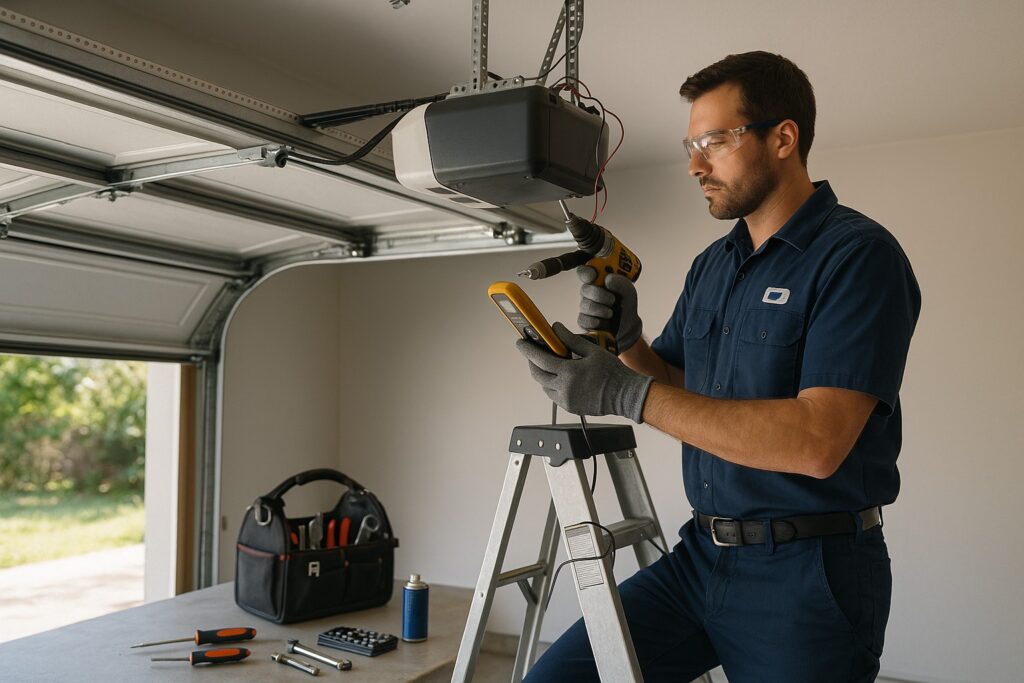
At Belerick Garage Doors LLC, we take time to explain findings, show worn parts, and answer questions in plain language. We want you to feel confident about every decision.
A Plain-Language Glossary
- Balance: The door’s ability to stay in place when lifted halfway by hand. Good balance reduces strain and makes the opener last longer.
- Drums and Cables: Drums sit at the ends of the shaft above the door. Cables wrap around the drums to lift the door evenly.
- Photo-Eye Sensors: Small devices near the bottom of the tracks project a safety beam. If the beam is interrupted, the door will not close.
- Bottom Seal and Threshold: Weather-stripping that blocks drafts, water, and pests.
- Cycle: One opening and closing of the door. Springs are rated for a certain number of cycles.
A Practical Maintenance Plan You Can Follow
Quarterly quick check
- Wipe sensors, look for frayed cables, and listen for new noises.
- Brush debris from tracks.
- Check weather seals and sweep the garage threshold.
Annual professional tune-up
- Full inspection, lubrication, hardware tightening, balance adjustment, opener testing, and safety verification.
When to call immediately
- Door slams shut, stops crooked, or will not open.
- You hear a bang, and the door becomes very heavy.
- The opener runs, but the door does not move.
- The door reverses for no obvious reason.
By following this plan, you avoid most emergencies and protect your family, your vehicle, and your budget.
Real-Life Savings: Three Short Scenarios
- The early catch – A tiny squeak revealed a roller bearing starting to fail. Replacing the roller cost little and took minutes. Waiting would have stressed hinges and the opener, leading to a far bigger bill.
- The balance fix – A door that would not stay halfway in the balance test needed a spring adjustment. Proper balance stopped the opener from straining and extended its life.
- The seal solution – A cracked bottom seal let rainwater in during storms. Replacing the seal and adding a threshold kept the garage dry and lowered the humidity that was rusting tools.
Quick Troubleshooting Guide
- Door will not close, and the lights blink – Sensors likely misaligned. Gently realign until both LEDs are steady. If it still fails, call for service.
- Door opens then reverses – Travel limits may be off, or the door is binding on the tracks. Professional adjustment is recommended.
- Remote works, wall button does not – Check lock function on the wall console. If unlocked and still not working, the circuit or wiring may need repair.
- Door is very heavy – Springs are likely fatigued or broken. Do not attempt to lift. Call a professional.
Frequently Asked Questions (FAQs)
1. How long does a typical garage door repair take?
Most standard garage door repairs, such as spring or cable replacement, take about one to two hours to complete. More complex jobs like full opener installation or track realignment may take longer, depending on the door type and condition.
2. What is the average lifespan of a garage door?
With proper maintenance and professional care, a quality garage door can last anywhere between 15 and 30 years. Factors like material type, local weather conditions, and usage frequency greatly influence its longevity.
3. Can extreme weather in Austin affect my garage door’s performance?
Yes, high temperatures and humidity can cause metal parts to expand and wooden panels to warp, affecting smooth operation. Regular lubrication, inspections, and weather sealing help protect your door from Texas’s heat and sudden storms.
4. Is it worth upgrading to a smart garage door opener?
Absolutely. Smart openers offer enhanced convenience and security, allowing you to control and monitor your door remotely from your phone. They also send alerts if your door is left open, helping you save energy and maintain safety.
Final Thoughts: Safety First, Savings Always
Professional garage door repair is not just about fixing what is broken. It is a plan for safety, comfort, and smart spending. With regular maintenance, precise adjustments, and timely replacement of worn parts, you protect your family, your car, your time, and your wallet. You get a door that opens quietly every morning, closes securely every night, and keeps your home looking and feeling its best.
How Can Belerick Garage Doors LLC Help You?
At Belerick Garage Doors LLC, we specialize in residential and commercial garage door installation, repair, and maintenance across Austin and nearby Central Texas communities. Our trained, skilled technicians bring years of hands-on experience and a commitment to clear communication and quality parts. We offer thorough inspections, precise adjustments, opener services, spring and cable replacement, panel repair, weather-seal upgrades, and preventive maintenance plans designed to fit your usage and your budget.
If your door is noisy, heavy, slow, crooked, or simply due for a tune-up, we are ready to help. Ask questions, request an estimate, or schedule an appointment today. Your safety and your savings begin with a single call.
📍 Address: 701 Tillery St., Austin, TX 78702, United States
📞 Phone: (512) 601-4514
Contact us now and let Belerick Garage Doors LLC keep your door operating smoothly, safely, and efficiently for years to come.